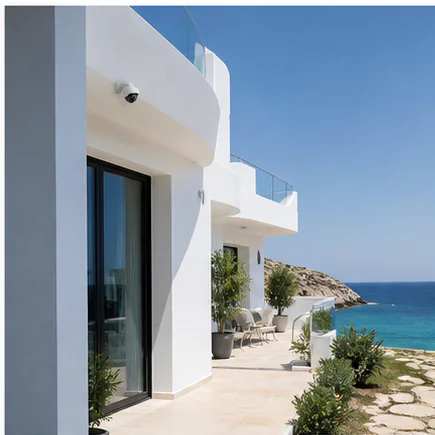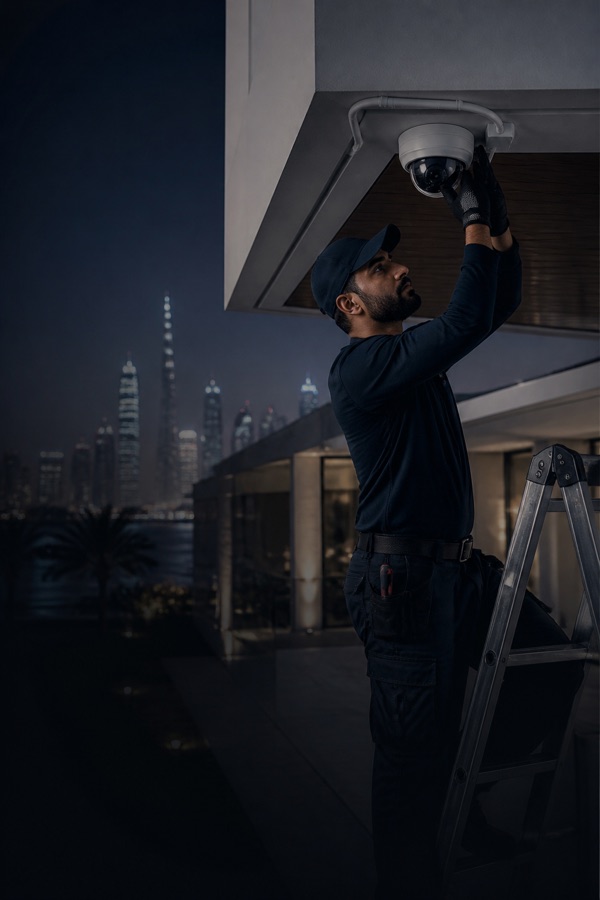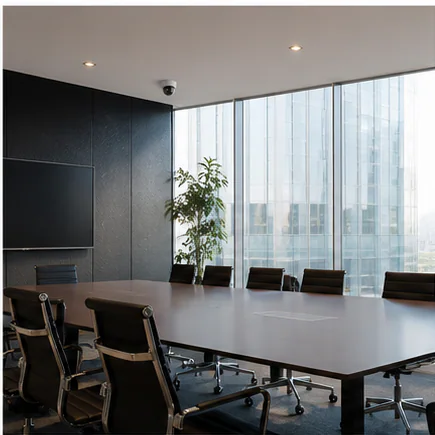
Start with risks and evidence goals, not camera count. Map approaches and priority events, define what each view must show, then design lenses, lighting, cable routes, recording, remote access and maintenance around those outcomes.
Build an evidence map
Walk the property in both directions and at different times. Mark where a person or vehicle first appears, where identification is possible, and where an event should remain visible. Numbered views prevent overlap and assumptions.
Separate overview and identification views
One wide camera often cannot provide full-area context and a detailed face or plate. Use the operational need to decide whether a targeted view is justified.
Design infrastructure and recording together
Recorder location, cable length, PoE capacity, network security, backup power and storage are part of design. Document bitrate assumptions and keep equipment serviceable.
Commission with a repeatable checklist
Verify day/night images, timestamps, playback, export, permissions, mobile access and fault reporting. Record camera names and angles.
- Day/night focus test
- Search and export test
- Unique user handover
- Camera schedule and diagram
- Cleaning plan
Frequently asked questions
Decide camera count before survey?
No. Start with target views and risks.
Where should the recorder go?
A secure, ventilated, serviceable location with suitable power and network.
What should handover test?
Live and recorded images, night performance, time, export, users, remote viewing and storage.