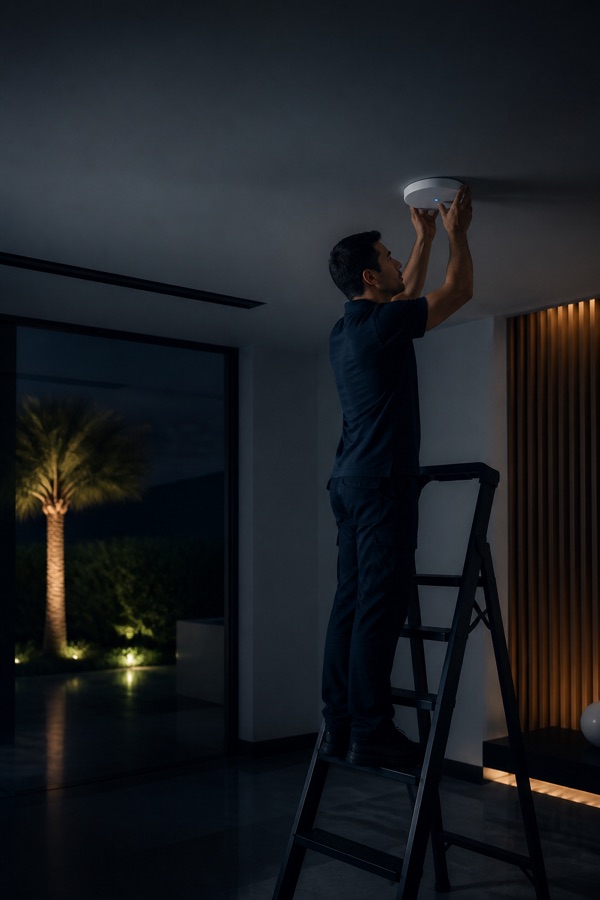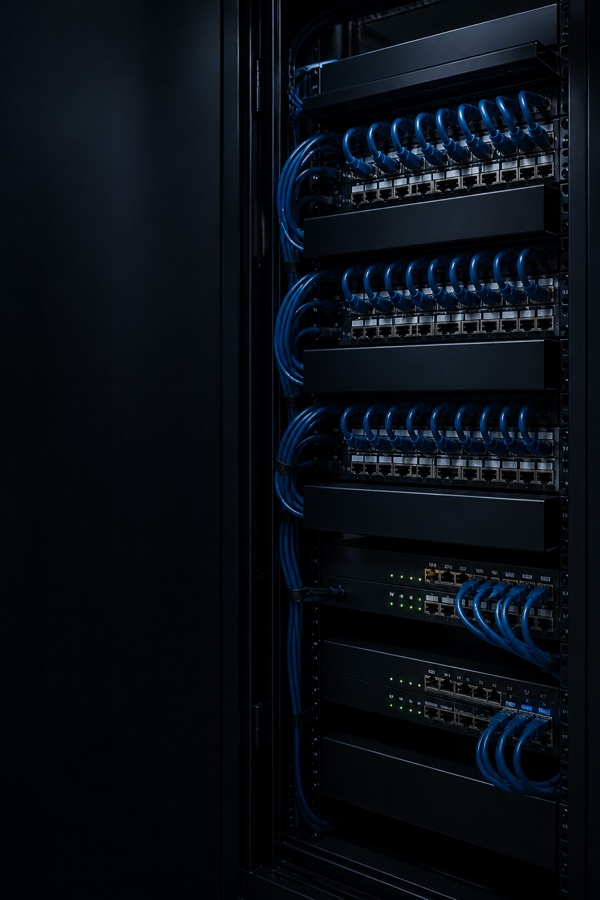
Wired access points usually provide the most predictable coverage because each radio has stable Ethernet backhaul. Mesh can be practical where cabling is impossible, but node placement must preserve strong backhaul—not merely extend a weak signal.
The building determines wireless design
Concrete, lift cores, stone, metal doors and floors attenuate signals. Validate floor-plan estimates because coverage depends on materials and interference.
Why wired access points are stable
Ethernet backhaul gives each access point a predictable path and avoids using radio capacity to relay traffic. It supports planned positions and centralized PoE.
Where mesh makes sense
Mesh can suit a retrofit where routes would damage interiors. Place nodes where they receive strong backhaul, not inside the dead zone.
Include cameras and smart devices
Do not let critical CCTV depend on an untested consumer extension. Separate fixed devices where practical.
| Need | Likely direction |
|---|---|
| Accessible cabling | Wired PoE access points |
| No viable routes | Surveyed mesh or bridge |
| High device density | Managed APs |
| Critical CCTV | Wired path |
Frequently asked questions
Do more mesh nodes always help?
No. Poor placement can repeat a weak link and add interference.
Can access points share a WiFi name?
Yes. Managed access points can share an SSID; clients still affect roaming.
Should CCTV use villa WiFi?
Only where reliability is proven. Fixed cameras are commonly better wired.